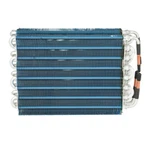
The widespread application of evaporators in chemical, food, pharmaceutical, and energy recovery industries makes their efficient and stable operation crucial to process success.Mastering scientific usage techniques can not only improve evaporation efficiency and product quality but also extend equipment lifespan and reduce energy consumption and maintenance costs. Practical experience shows that these techniques should be applied throughout the entire process of selection, configuration, operation control, and daily management.
In the selection and configuration stage, the key is to accurately match material characteristics with process requirements. For high-viscosity liquids, forced circulation evaporators are recommended to overcome viscous resistance with mechanical power and prevent the thickening of the stagnant layer on the heat transfer surface. Heat-sensitive materials should be operated in a vacuum and low-temperature environment, and scraper or plate structures with short residence times should be preferred to reduce the risk of thermal degradation. For suspensions with high solids content, easy-to-clean design and anti-clogging measures are necessary to prevent crystal or particle deposition in the flow channels. Simultaneously, the heat exchange area and heating medium parameters should be calculated reasonably, leaving appropriate margins to cope with load fluctuations and seasonal temperature changes.
Operation control is the core of these usage techniques. Based on real-time monitoring of temperature difference, pressure, and flow rate data, heating power and feed rate should be dynamically adjusted to keep the evaporator operating close to its optimal heat transfer coefficient. For multi-effect evaporation systems, optimizing the temperature difference distribution between effects can reduce irreversible losses and improve overall thermal efficiency. For materials prone to scaling or crystallization, staged evaporation or intermittent operation is recommended to reduce the single continuous evaporation time and slow down the scale accumulation rate. Precise control of vacuum level is also crucial; excessively high vacuum increases energy consumption, while excessively low vacuum affects evaporation driving force. It needs to be set comprehensively based on condensation capacity and system sealing.
Daily management techniques emphasize prevention and rapid correction. Establish trend analysis models and, based on changes in evaporation intensity and vapor-liquid separation efficiency, schedule cleaning or component inspections in advance to avoid sudden performance degradation. Chemical cleaning requires strict control of reagent concentration and contact time to prevent damage to the substrate; mechanical cleaning should use soft tools to protect the surface finish of heat transfer surfaces. Regular checks on the integrity of insulation layers and seals should be conducted to reduce operational drift caused by environmental heat dissipation and air infiltration.
In summary, the efficient use of evaporators relies on a series of techniques including operating condition matching, dynamic control, and preventative maintenance. Integrating these practical essentials into operating procedures can achieve stable and economical evaporation processes in complex and ever-changing industrial scenarios, providing solid support for improving the overall system efficiency.